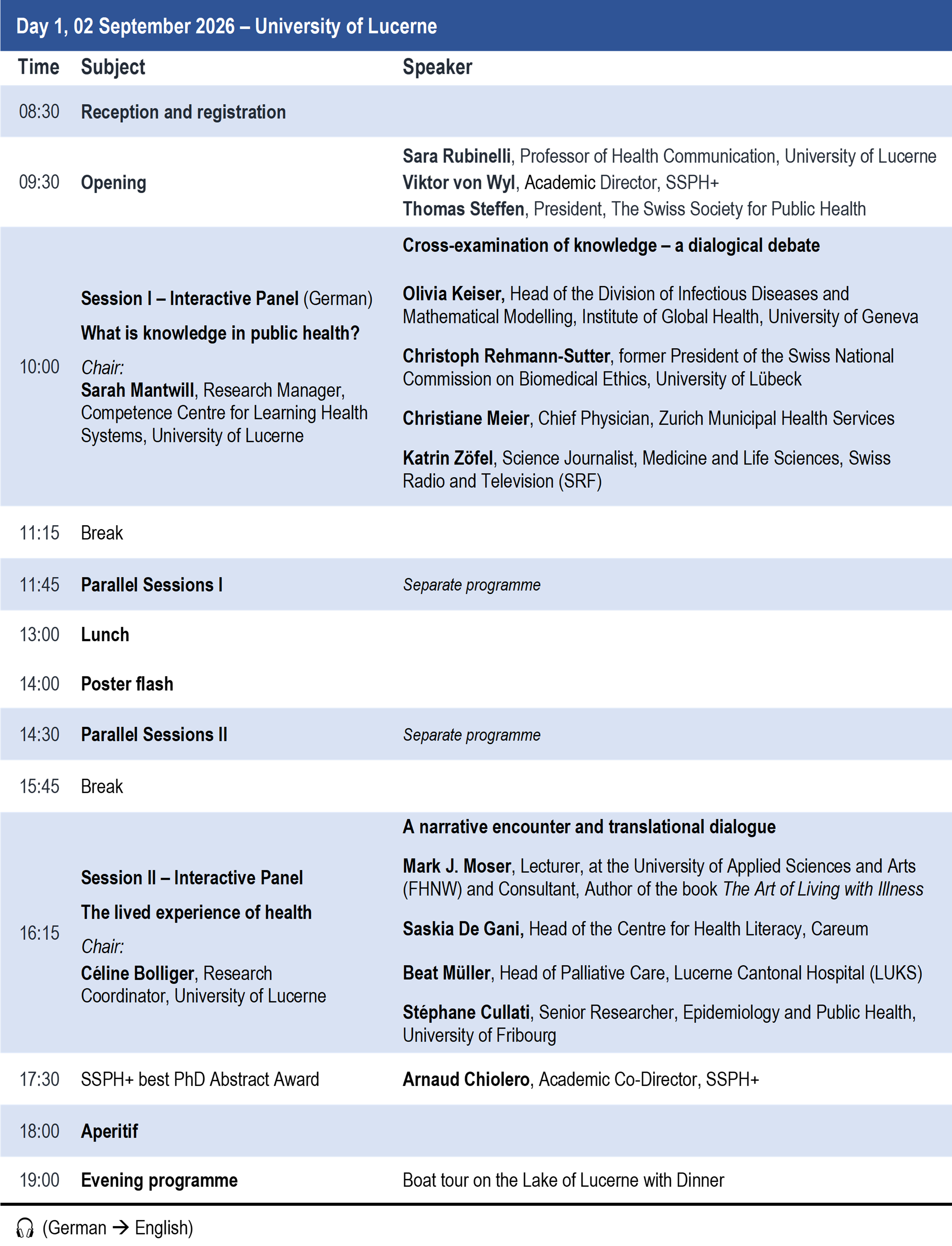
Session I. What is knowledge in public health?
What do we mean when we say we "know" something about health? This panel brings together different perspectives from epidemiology, philosophy, public health practice and journalism to examine how evidence is produced, interpreted and communicated, and what a plural understanding of knowledge means for public health.
Session II. The lived experience of health
Illness is more than symptoms: It touches identity, functioning and the search for meaning. Starting from lived experiences, this panel explores how public health can recognise and act upon the personal and often invisible dimensions of illness.
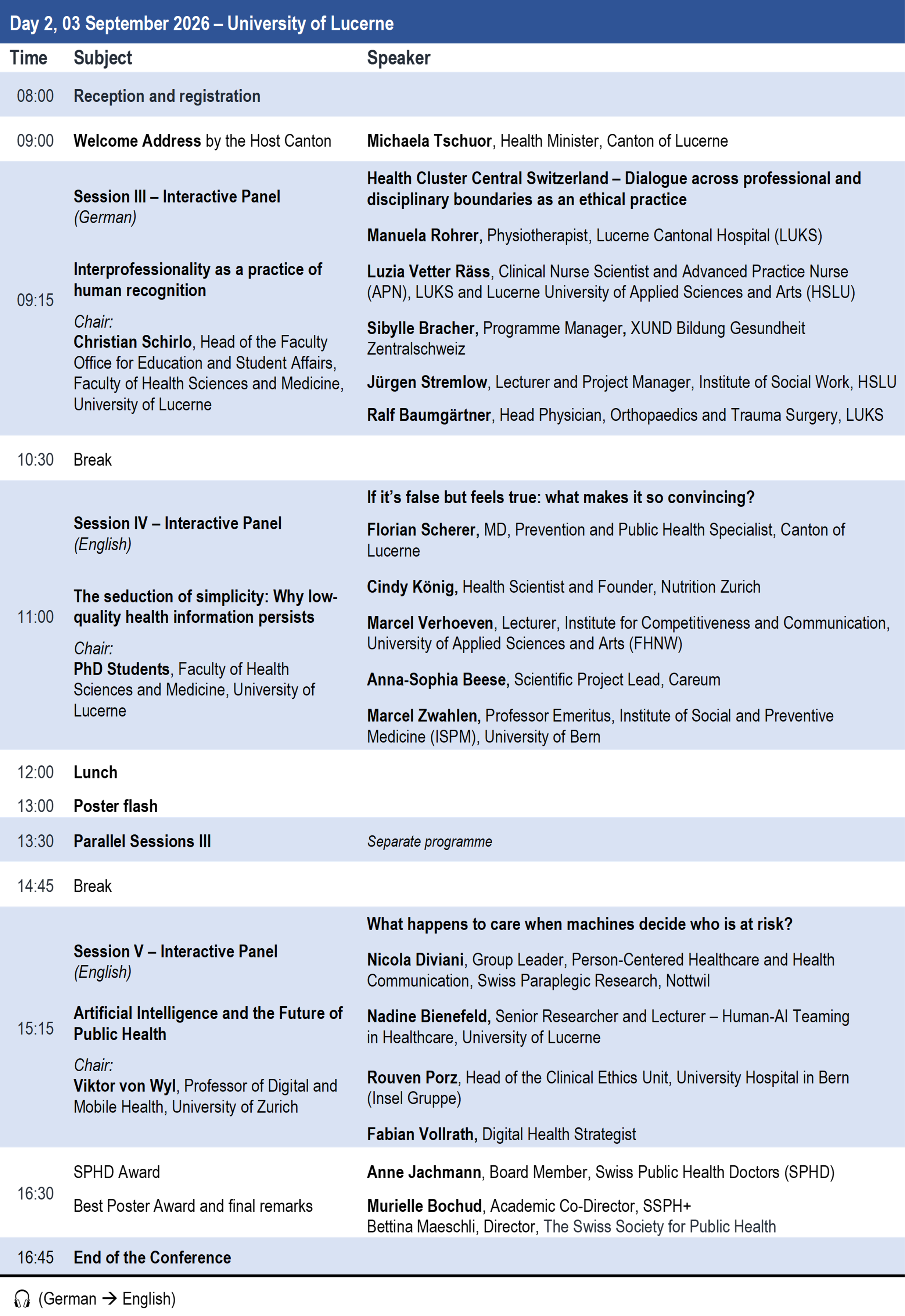
Session III. Interprofessionality as a practice of human recognition
Good care emerges between professions, not within them. Practitioners and educators from across the health and social professions discuss collaboration beyond disciplinary boundaries as an ethical practice: The mutual recognition of different forms of expertise in the service of the patient.
Session IV. The seduction of simplicity: Why low-quality health information persists
If it's false but feels truth: what makes it so convincing? This panel examines why simple but misleading health information persists and persuades, and how institutions can communicate complexity honestly without losing their audience.
Session V. Artificial Intelligence and the Future of Public Health
What happens to care when machines decide who is at risk? This panel brings together perspectives from ethics, data science, public health, and industry to explore the promises and risks of AI in prevention and care. And explores what must remain fundamentally human in health decision-making
Event venue:
University of Lucerne
Faculty of Health Sciences and Medicine
Frohburgstrasse 3 | 6002 Lucerne
Faculty of Health Sciences and Medicine - University of Lucerne